Best Viewpoints in Ljubljana for First-Time Visitors
A practical guide to Ljubljana viewpoints, covering castle panoramas, riverside perspectives, walking access, timing, and the best light for city photography.
A practical guide to Ljubljana viewpoints, covering castle panoramas, riverside perspectives, walking access, timing, and the best light for city photography.
Ljubljana is a compact city, which makes it a strong first article for PanoramaExplorer. The best views are close enough to combine into one slow photo walk, but different enough to show the city from several angles. In late March, the light is often softer than in summer, trees begin to return to color, and the old town feels easier to photograph before the busiest travel months.
The first viewpoint to plan around is Ljubljana Castle. The castle has stood above the city for about 900 years, and its outlook tower and ramparts give one of the clearest views over the old town, the Ljubljanica River, and the mountain line beyond the city. Visit Ljubljana describes the castle as the city’s main attraction and notes that the Outlook Tower and ramparts offer some of its best views. For background, see Visit Ljubljana’s castle guide.
For a simple route, start in Prešeren Square, cross the Triple Bridge, and walk through the old town toward the castle hill. The climb is short but steep in places. If you are carrying camera gear or traveling with children, the funicular is the easier option. If you walk, take the path slowly because several small openings between the trees give framed views of red roofs, church towers, and the river curve below.
The castle tower works best when visibility is clear. On a bright day, you can look past the old town toward the Kamnik-Savinja Alps. For photography, avoid treating it only as a skyline stop. The strongest images often come from details: the green dome of the Cathedral of St. Nicholas, the curve of the river, and the regular pattern of roofs around the central market. A longer lens helps separate these details from the wider scene.
The second viewpoint is Nebotičnik, Ljubljana’s historic skyscraper. It gives a different perspective because you are looking back toward the castle instead of looking from it. This is useful for a balanced photo set. From here, the castle becomes the subject, not the shooting platform. Late afternoon is usually the better choice because the city center gains warmer side light, and the castle hill becomes easier to read in the frame.
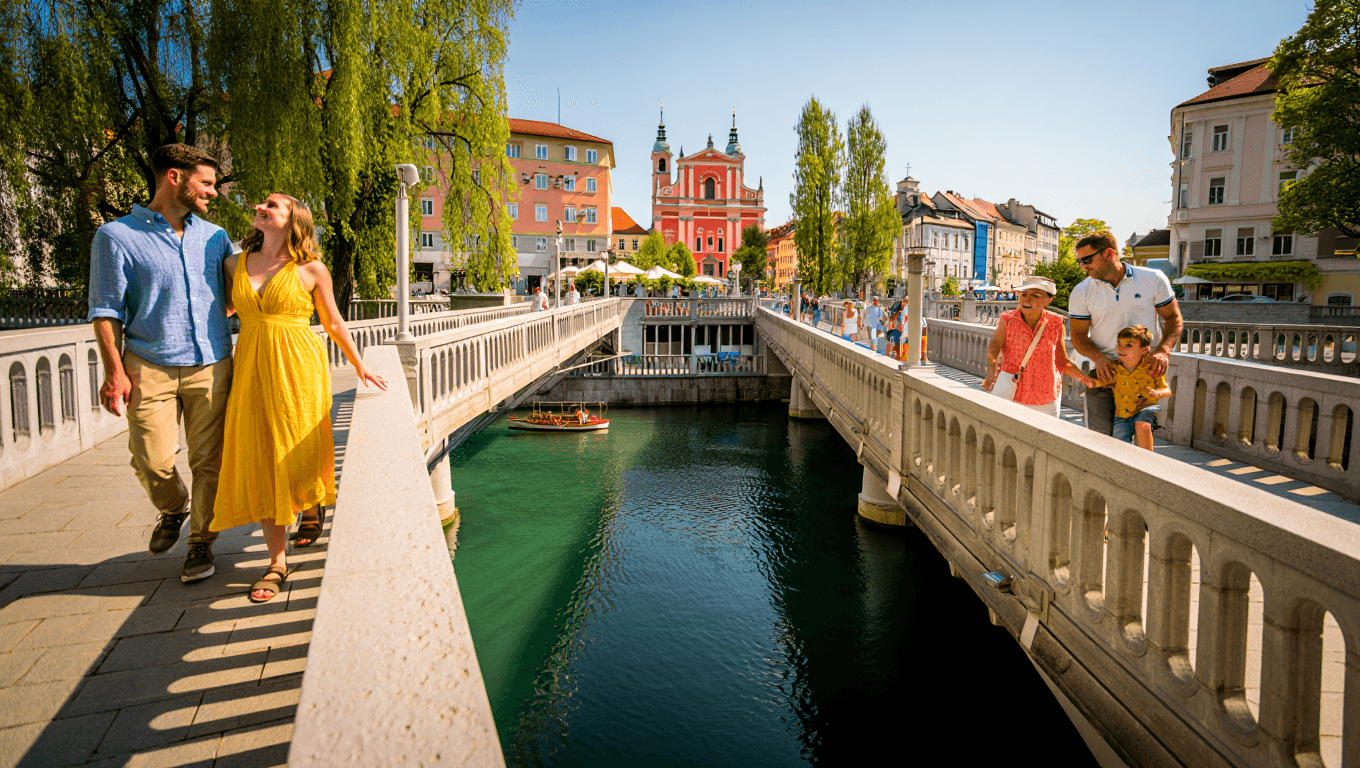
For a lower and quieter view, use the riverside bridges. Butchers’ Bridge, Cobbler’s Bridge, and the area near the Triple Bridge all work well for street-level panorama shots. These are not high viewpoints, but they show how Ljubljana is built around a pedestrian-friendly center. Reflections, bridge railings, riverside cafés, and the castle above the rooftops can all sit in one natural composition.
Another useful stop is Tivoli Park, especially if you want a calmer spring article angle. The park does not give the same classic postcard view as the castle, but it adds context. A good visual travel guide should not only chase the highest platform. It should help readers understand how to move through a place. Tivoli gives space, greenery, and a different rhythm after the stone streets of the center.
If this is your first Ljubljana photo route, keep the plan simple: old town bridges in the morning, castle hill before lunch, Nebotičnik later in the day, and Tivoli if you want a wider walk. This order avoids rushing and gives enough variation for a complete visual story. Readers planning a Slovenia trip can also use this city route as a practical starting point before moving toward nearby Alpine scenery on a separate day.
Ljubljana’s value is not size. It is clarity. The viewpoints are easy to reach, the old town is readable from above, and the city gives beginners a good lesson in route-based travel photography: start high, move low, return high, and let the same place change with the light.